Living Here · November 9, 2026
Your Hurricane-Ready Home Checklist
Impact windows, roof age, flood zones, elevation certificates, generators and a calm before-the-storm list: what every Tampa Bay homeowner and buyer should know.
Hurricane season runs from June 1 through November 30. Living on the Gulf Coast means taking storms seriously, but it doesn’t mean living in fear. Most of being ready is done long before a storm has a name. Whether you own a home here or you’re shopping for one, here’s what we look at and what we recommend.
This is general information, not insurance, engineering or legal advice. Always check with your insurance agent, a licensed inspector and your county’s emergency management office.
1. Openings: windows, doors and the garage
Wind damage often starts when an opening fails: a window breaks or a garage door buckles, and pressure builds inside the house.
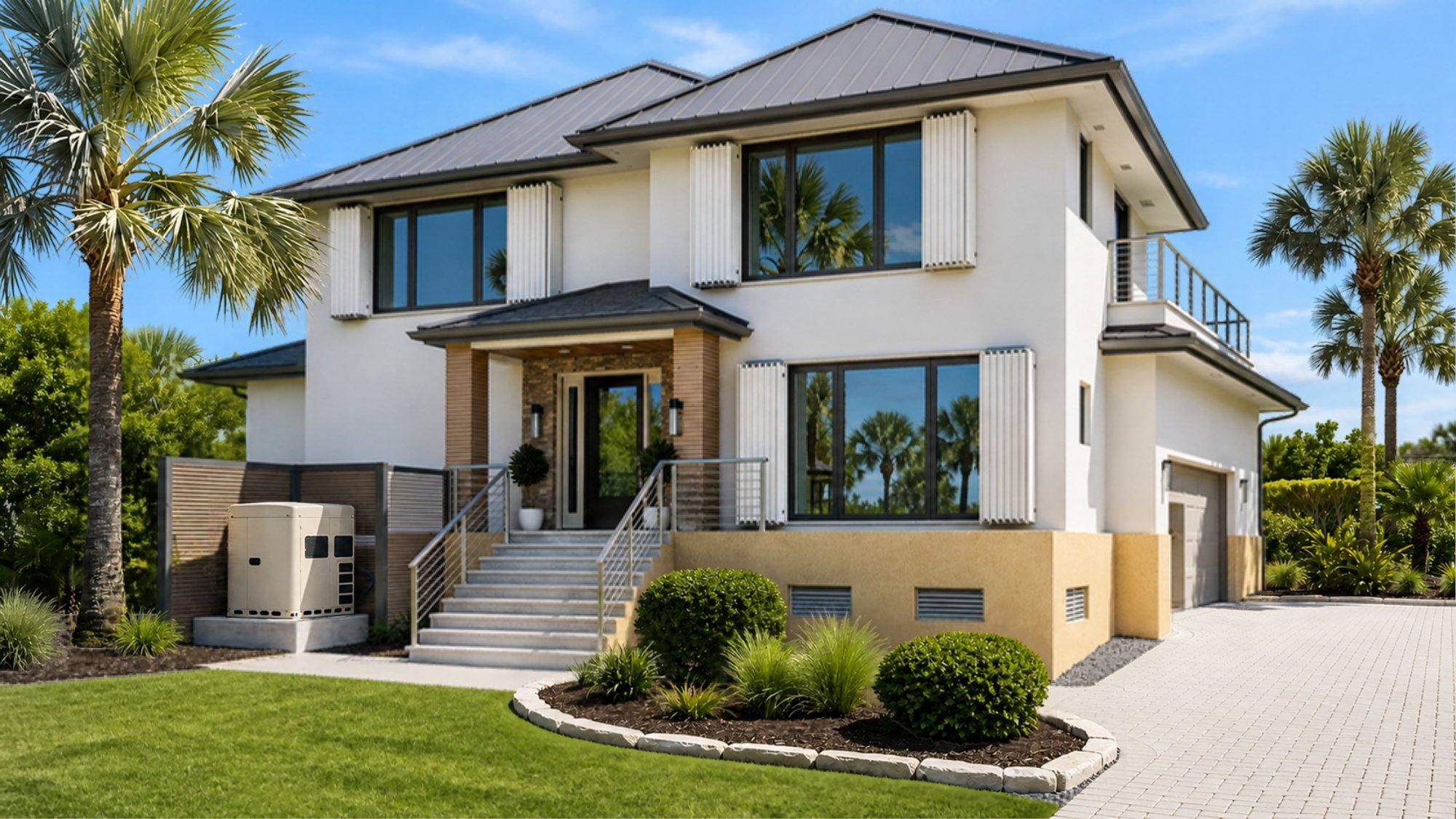
- Impact-rated windows and doors resist wind-borne debris without shutters.
- Hurricane shutters (accordion, roll-down or storm panels) are a common alternative. Know where they are and practice putting them up.
- The garage door is often the largest opening in the house. Ask whether it’s wind-rated.
2. The roof: age, shape and attachment
The roof matters for safety and for insurance. Many Florida insurers look closely at roof age and condition, and older roofs can be harder or more expensive to insure.
A wind mitigation inspection documents features like roof shape, roof-to-wall connections and opening protection. It can qualify a home for insurance discounts. Older homes may also need a 4-point inspection (roof, electrical, plumbing and HVAC) to get insured.
Most of being ready is done long before a storm has a name.
3. Water: flood zones and elevation
Hurricanes bring wind and water, and storm surge is often the bigger danger.
- Know your flood zone. You can look up a property on FEMA’s flood maps. Remember that flooding also happens outside high-risk zones.
- Ask for the elevation certificate. It shows how high the home sits compared to expected flood levels, and it can affect flood insurance pricing.
- Standard homeowners policies don’t cover flood. Flood insurance is separate, and new NFIP policies typically have a 30-day waiting period, so don’t wait for a forecast.
- Know your evacuation zone, which is different from your flood zone. Your county’s emergency management site lists both.
4. Power: generators done safely
- Portable generators must run outdoors, far from windows and doors. Never run one in a garage, even with the door open. Carbon monoxide is deadly.
- Standby generators start automatically and are installed by a licensed contractor with the right permits.
- Install battery CO detectors on every level of your home.
5. The before-the-storm list
When a storm is forecast, a calm checklist beats a crowded store:
- Medications, important documents and chargers in a waterproof go-bag
- Water (about a gallon per person per day) and non-perishable food for several days
- Shutters up or impact openings closed; outdoor furniture and grills secured indoors
- Photos or video of your home and belongings for insurance
- A full tank of gas and some cash
- A plan for pets, and a place to go if you’re told to evacuate
- Your insurance policy numbers and agent’s contact saved on your phone
Buying? Ask these questions
When we help buyers here, these questions are part of every search: How old is the roof? Are the openings protected? What’s the flood zone and the elevation? Is there a wind mitigation report? What will insurance cost, and can we get a quote before the inspection period ends? Our Waterfront Buyer’s Checklist and Florida Condo Buyer’s Checklist go deeper.
Selling? Get ahead of it
Buyers will ask, so have your roof permit, wind mitigation report, any elevation certificate and insurance history ready. Our Seller’s Insurance, Inspection & Docs guide shows you what to gather, and the downloadable Hurricane-Ready Home Checklist is a printable version of this list.
Have questions about a specific home? Talk to our team. We’re happy to help you think it through.

Keller Williams Realty · About the Team